
Fabric Knowledge
What Is Blackout Curtain Fabric? Construction, GSM and Sourcing Basics
Blackout performance comes from how a fabric is engineered, not from one number alone. This guide explains the construction choices and sample checks that matter to professional buyers.
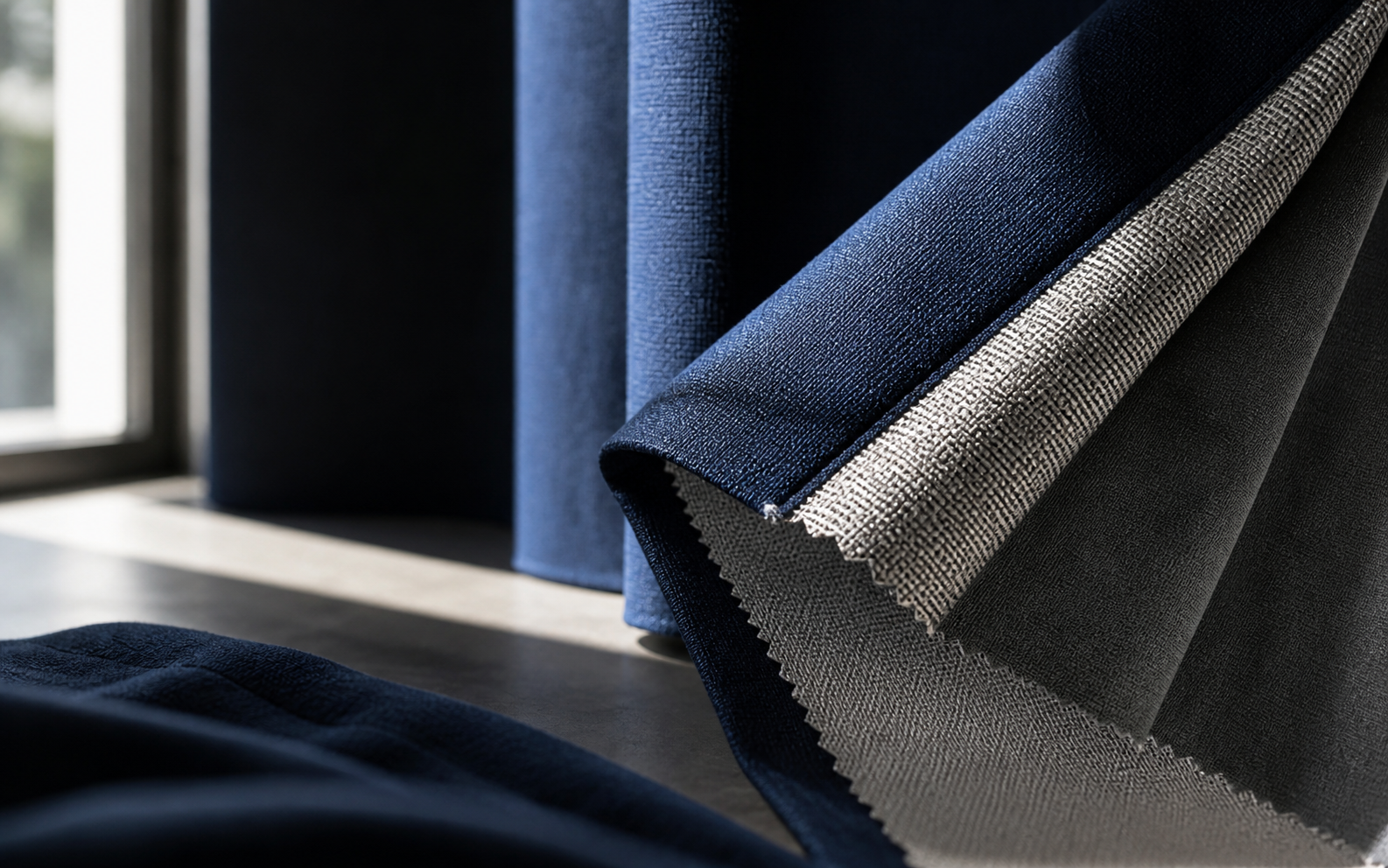
Blackout is a performance description, not a single fabric recipe
Blackout curtain fabric is designed to reduce the amount of external light passing through a window treatment. The result can be achieved through dense woven construction, multiple yarn layers, dark yarns inside the structure, a coated backing, or a combination of these methods.
For a wholesale buyer, the important point is that two fabrics described as blackout may behave differently. Color, construction, finishing, room conditions and the way a curtain is installed can all affect the visible result.
Common construction routes
| Construction | How it controls light | Buyer consideration |
|---|---|---|
| Dense woven fabric | Uses yarn density and structure to reduce transmission | Check both face and back appearance, drape and color consistency |
| Multi-layer or triple-weave | Places additional yarn layers inside the construction | Ask how the structure affects weight, hand feel and sewing |
| Coated blackout | Adds a light-blocking layer to the reverse side | Review coating uniformity, flexibility, odor and care requirements |
| Black-yarn construction | Uses darker internal yarns to strengthen light control | Compare light colors as well as dark colors during sampling |
What GSM tells you—and what it does not
GSM means grams per square meter. It is a useful way to compare fabric weight, estimate handling and discuss consistency, but it is not a standalone blackout rating. A heavier fabric can still transmit light if its structure is open, while a well-engineered construction may perform strongly without being the heaviest option.
Use GSM together with width, material, construction, finishing, color and a physical light test. Buyers developing a finished curtain should also consider how the fabric hangs, how much volume it creates when packed and whether the selected heading system suits the weight.
Build a sourcing specification before comparing quotations
A useful inquiry states the intended market, supply form, material preference, width, target hand feel, color direction, finishing requirements and whether the fabric will be sold by the roll or converted into finished curtains. If a test method or project standard applies, identify it before sampling rather than after production planning begins.
Avoid comparing suppliers only on the word “blackout.” Ask each supplier to describe the proposed construction and provide comparable samples. That creates a clearer basis for evaluating performance, appearance and commercial suitability.
- Confirm fabric width and whether it is usable width or nominal width.
- Review face, reverse side, selvedge and color under consistent lighting.
- Ask how color and construction may affect light-blocking performance.
- Clarify roll supply, finished-curtain processing and packaging separately.
- Keep the approved sample as the physical reference for later checks.

FAQ
Questions buyers often ask
Does higher GSM always mean better blackout?+
No. GSM describes weight. Blackout performance also depends on yarn density, weave, internal layers, coating, color and finishing.
Should buyers test every color?+
At minimum, test representative light and dark colors. Pale colors can reveal differences that are less obvious in dark shades.
Can blackout fabric be supplied as finished curtains?+
Many blackout constructions can be converted into finished curtains, but header style, dimensions, lining, sewing and packaging should be confirmed as a separate specification.
Stay updated with ZZA
Sourcing guides and product insights for professional buyers.